
-
Ensure that you are signed in to your PC with administrator permissions:
-
If you are, continue to step 2.
-
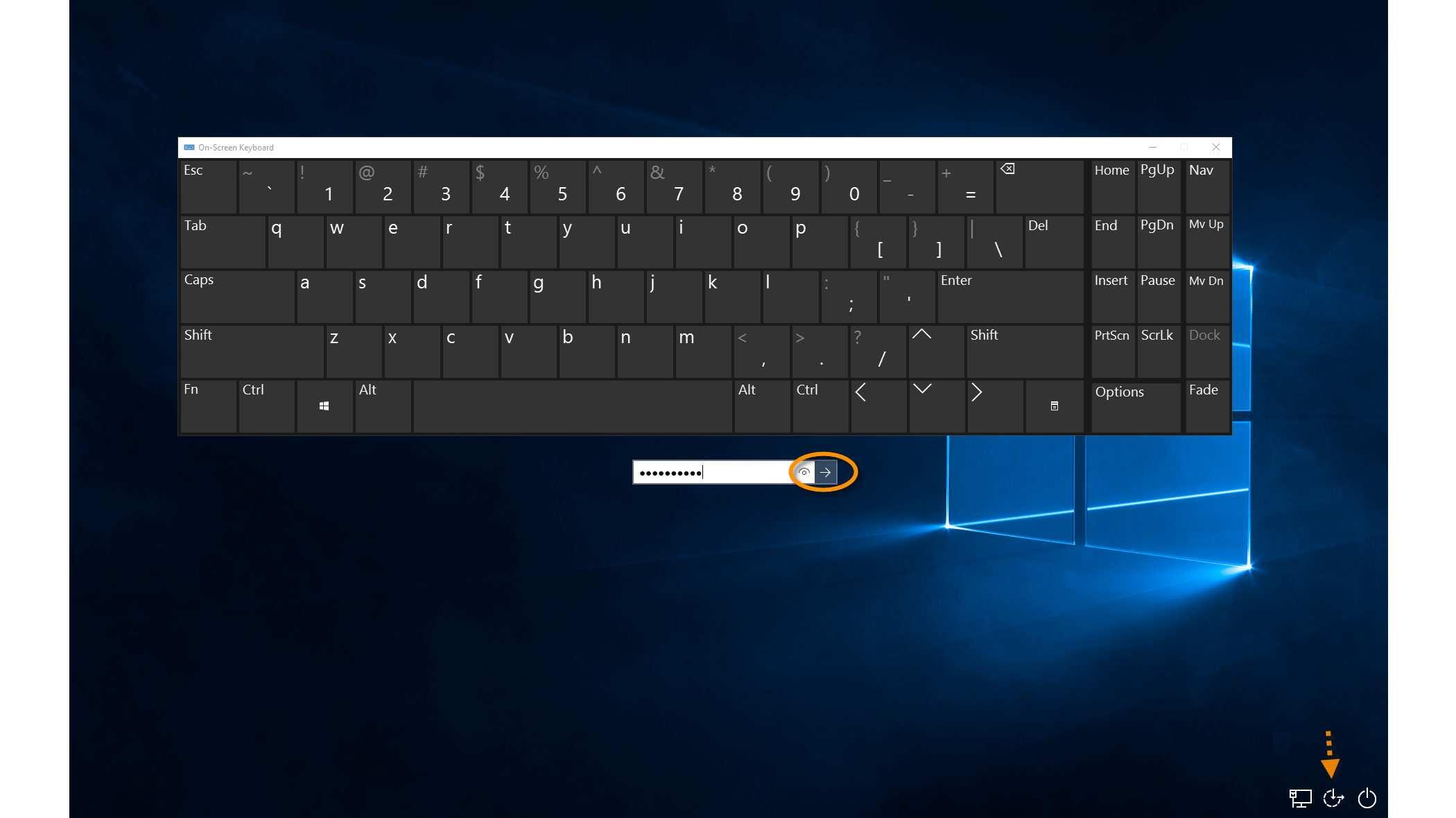
If you are not, right-click the Windows Start
 icon, select Shut down or sign out then select Sign out. On the login screen, click the Ease of access
 icon, then select On-Screen Keyboard. Use the keyboard that opens to type your administrator credentials, and click the arrow to sign in.
-
If you are not, click your user name at the top-right of your screen, then click Sign out. On the login screen, click the Ease of access
icon, then click On-Screen Keyboard. Use the keyboard that opens to type your administrator credentials, and click the arrow to sign in. 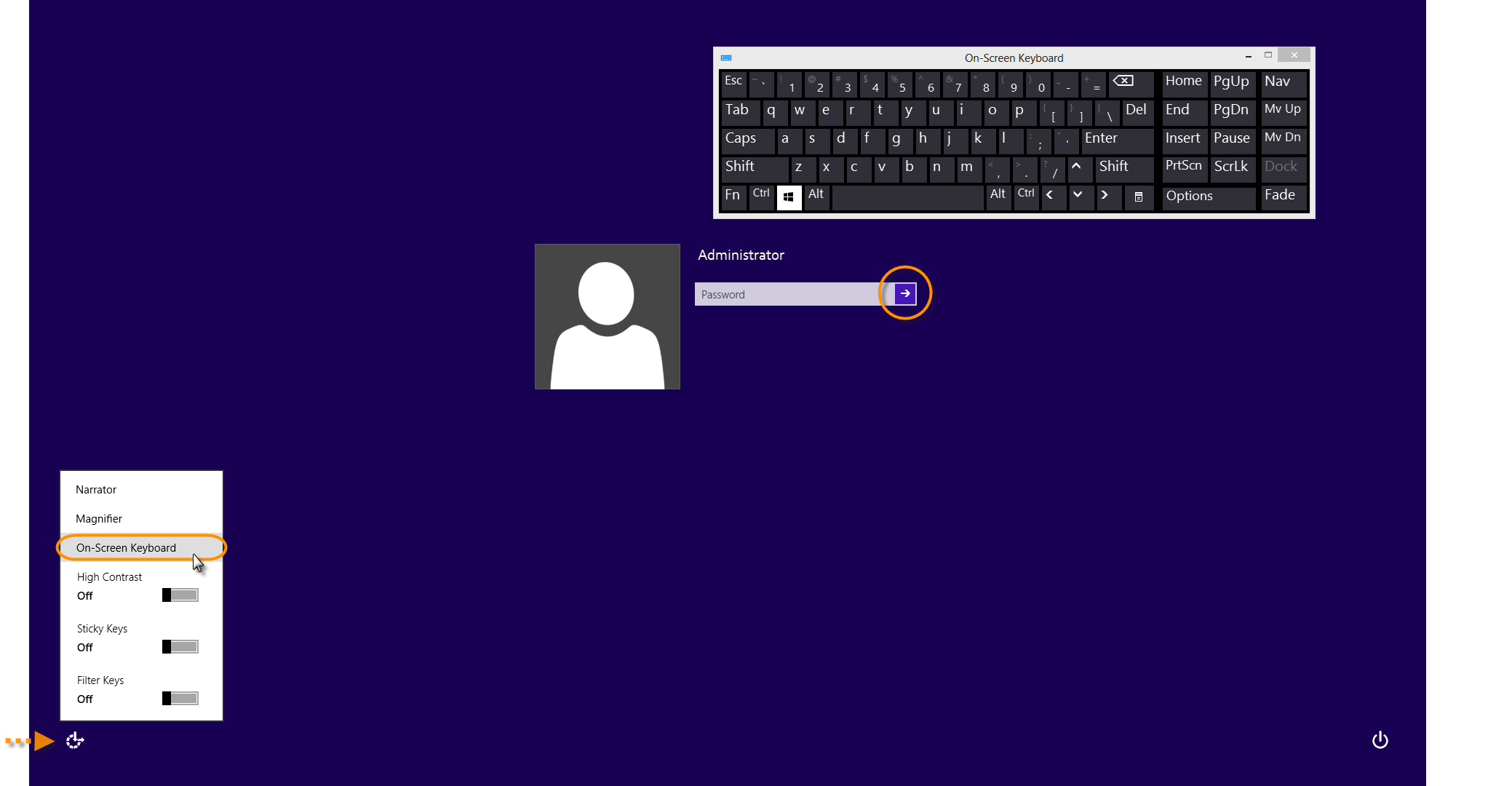
-
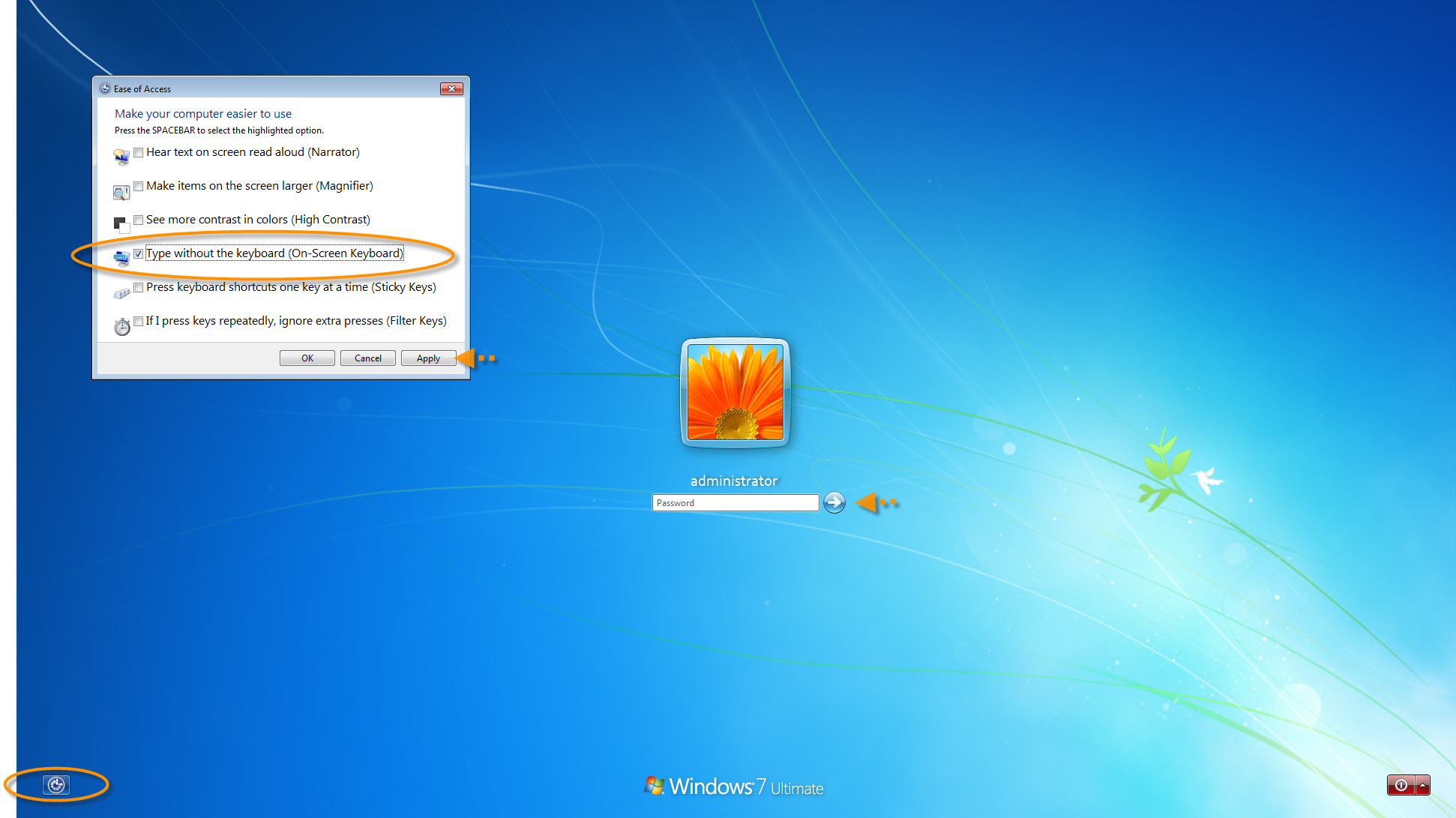
If you are not, click the Windows Start
 icon, click the arrow next to Shut down, then click Log off. On the login screen, click the Ease of access
 icon, tick Type without the keyboard (On-Screen Keyboard) and click Apply. Use the keyboard that opens to type your administrator credentials, and click the arrow
 to sign in.
If you do not have administrator permissions and are unable to sign in to your PC as an Administrator, contact the Administrator of your PC.
-
-
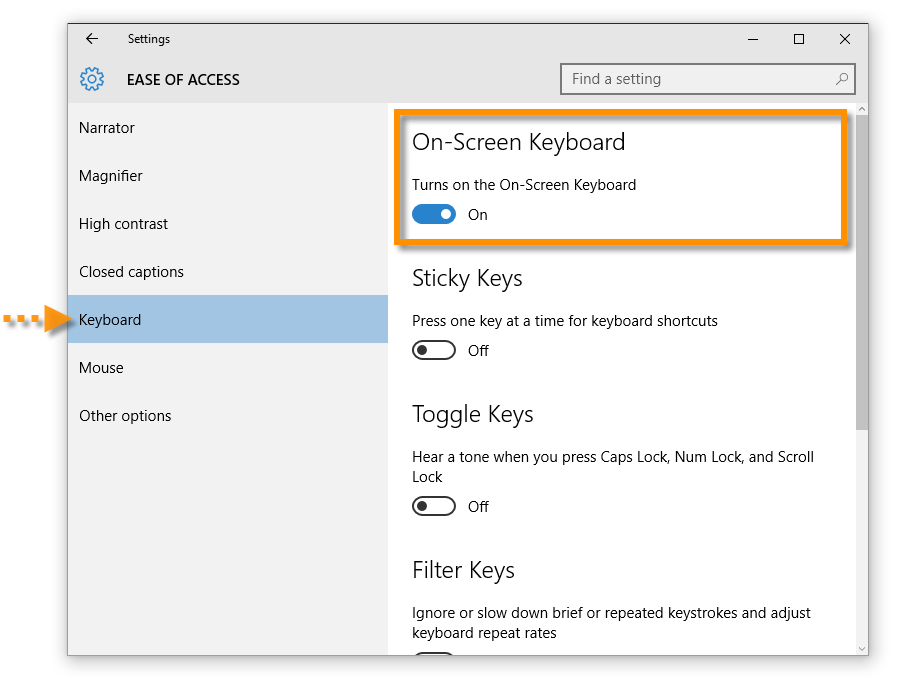
Click the Windows Start
icon, select Settings ▸ Ease of Access ▸ Keyboard, then turn on  the On-Screen Keyboard.
-
Use the keyboard to type
regeditinto the Windows search box to locate the Registry editor, then open it.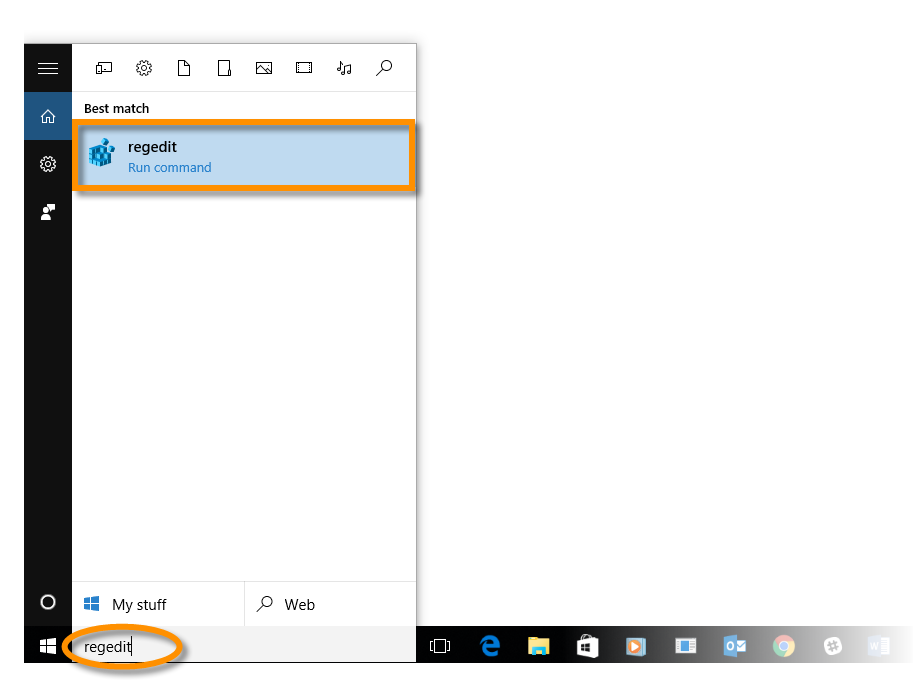
-
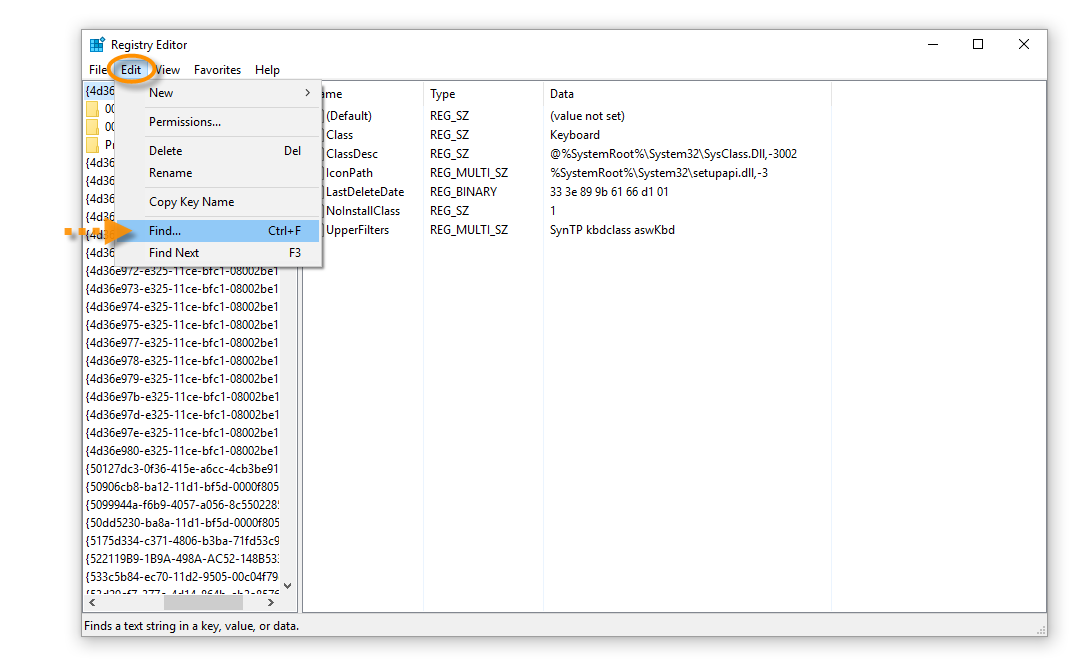
In the Registry editor, click Edit, then select Find....
-
In the Find dialog, type
aswKbdusing the onscreen keyboard, then click Find Next.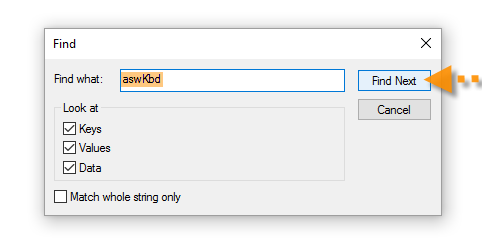
-
Open each UpperFilters entry that the Registry editor finds, delete the
aswKbdtext from the Value data field, then click OK.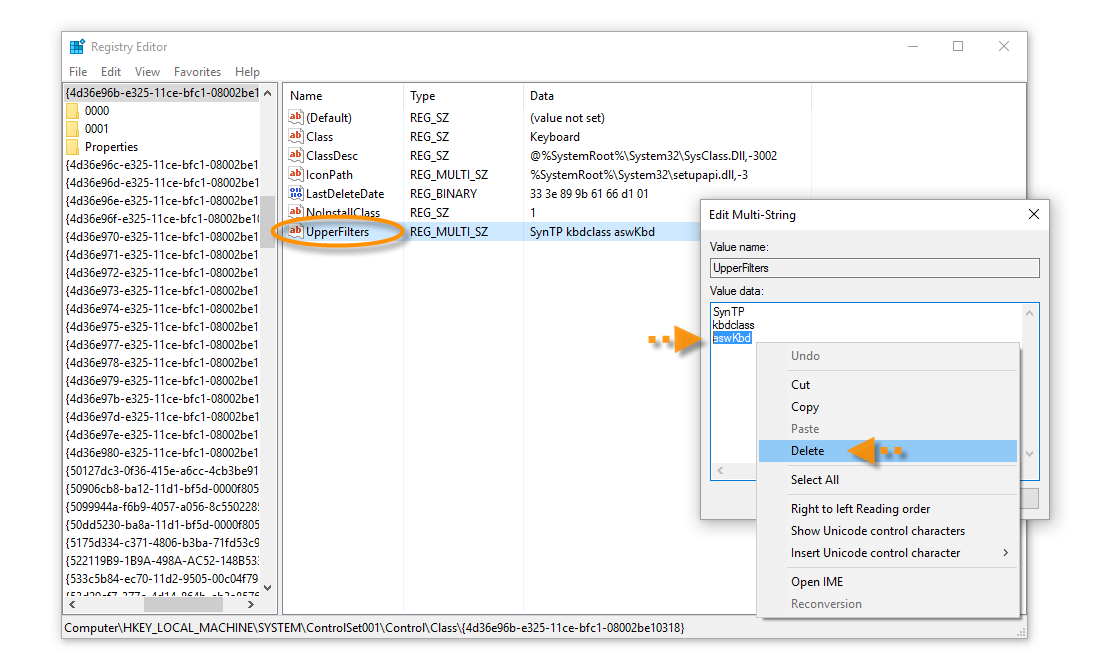
-
Repeat the previous step for each UpperFilters entry that the Registry editor finds, then exit the Registry editor and restart your PC.
IS YOUR COMPUTER SLOW? RUN LIKE NEW
If they are not maintained, computers lose performance over time. Avast Cleanup Premium can help significantly improve the performance of your computer.
Troubleshooting an unresponsive keyboard
Windows
Sometimes other programs or services running on your PC may conflict with your Avast software and cause your keyboard to stop working. This issue can usually be fixed with a simple modification to your Windows registry as outlined in this article.
Instructions
Use the following steps to reactivate your keyboard if it is unresponsive.
-
Ensure that you are signed in to your PC with administrator permissions:
-
If you are, continue to step 2.
-
If you are not, right-click the Windows Start
icon, select Shut down or sign out then select Sign out. On the login screen, click the Ease of access icon, then select On-Screen Keyboard. Use the keyboard that opens to type your administrator credentials, and click the arrow to sign in. -
If you are not, click your user name at the top-right of your screen, then click Sign out. On the login screen, click the Ease of access
icon, then click On-Screen Keyboard. Use the keyboard that opens to type your administrator credentials, and click the arrow to sign in. -
If you are not, click the Windows Start
icon, click the arrow next to Shut down, then click Log off. On the login screen, click the Ease of access icon, tick Type without the keyboard (On-Screen Keyboard) and click Apply. Use the keyboard that opens to type your administrator credentials, and click the arrow to sign in.
If you do not have administrator permissions and are unable to sign in to your PC as an Administrator, contact the Administrator of your PC.
-
-
In the Registry editor, click Edit, then select Find....
-
In the Find dialog, type
aswKbdusing the onscreen keyboard, then click Find Next. -
Open each UpperFilters entry that the Registry editor finds, delete the
aswKbdtext from the Value data field, then click OK. -
Repeat the previous step for each UpperFilters entry that the Registry editor finds, then exit the Registry editor and restart your PC.
-
Ensure that you are signed in to your PC with administrator permissions:
-
If you are, continue to step 2.
-
If you are not, right-click the Windows Start
icon, select Shut down or sign out then select Sign out. On the login screen, click the Ease of access icon, then select On-Screen Keyboard. Use the keyboard that opens to type your administrator credentials, and click the arrow to sign in. -
If you are not, click your user name at the top-right of your screen, then click Sign out. On the login screen, click the Ease of access
icon, then click On-Screen Keyboard. Use the keyboard that opens to type your administrator credentials, and click the arrow to sign in. -
If you are not, click the Windows Start
icon, click the arrow next to Shut down, then click Log off. On the login screen, click the Ease of access icon, tick Type without the keyboard (On-Screen Keyboard) and click Apply. Use the keyboard that opens to type your administrator credentials, and click the arrow to sign in.
If you do not have administrator permissions and are unable to sign in to your PC as an Administrator, contact the Administrator of your PC.
-
-
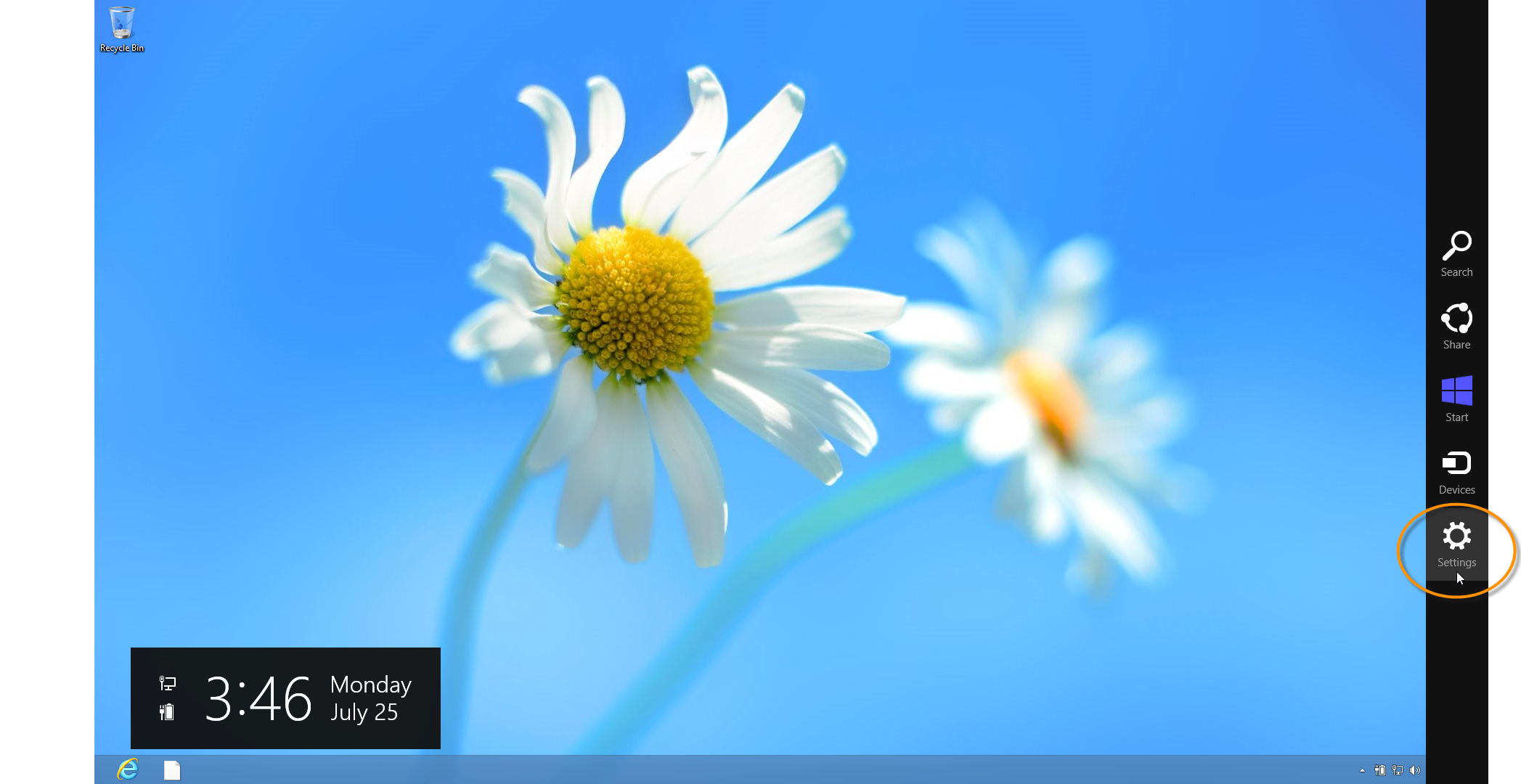
Select Settings from the Windows menu, then click Control Panel ▸ Ease of Access ▸ Ease of Access Center, and select Start On-Screen Keyboard.
-
Use the keyboard to type
regeditinto the Windows search box to locate and open the Registry editor.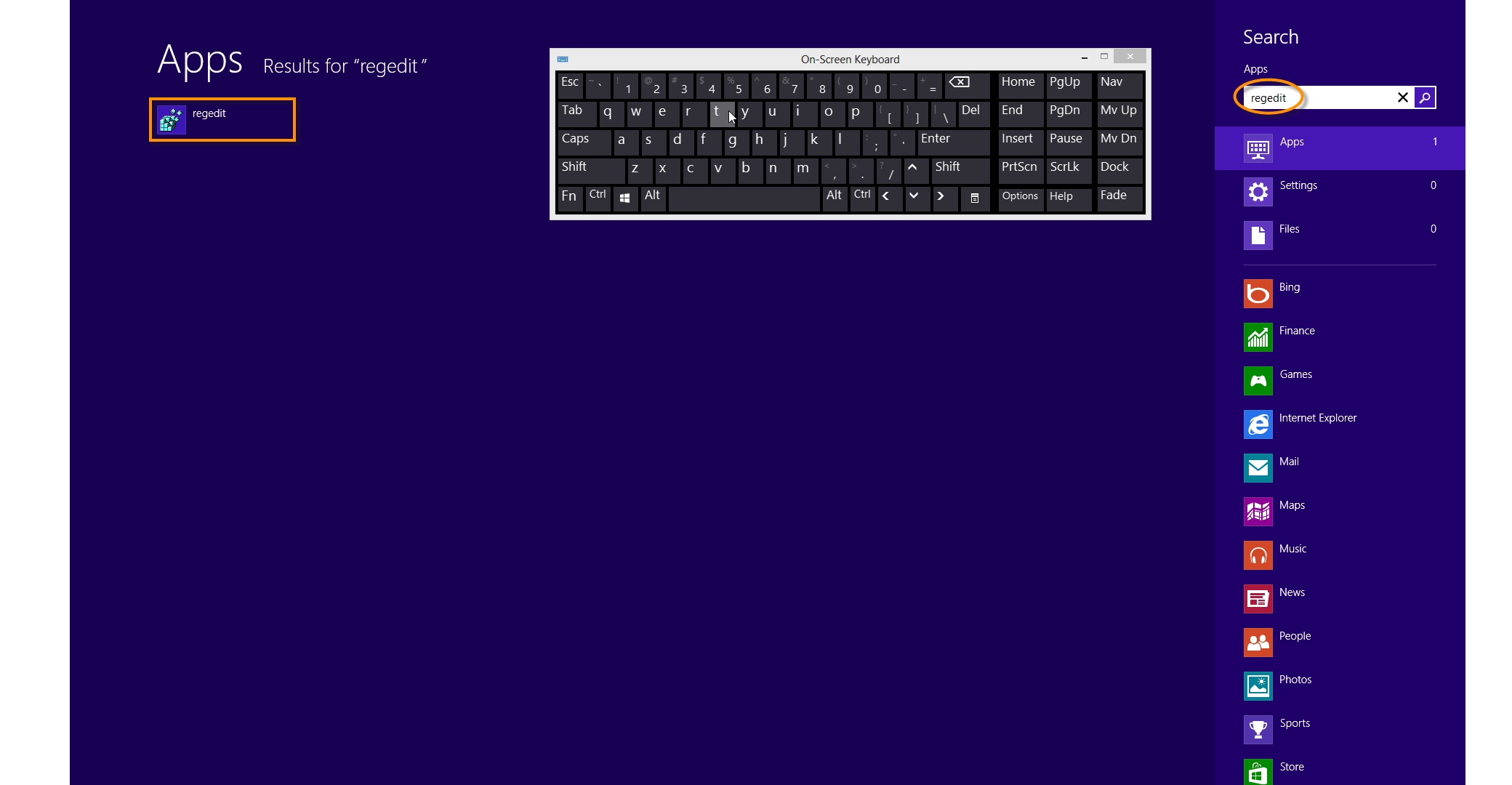
-
In the Registry editor, click Edit, then select Find....
-
In the Find dialog, type
aswKbdusing the onscreen keyboard, then click Find Next. -
Open each UpperFilters entry that the Registry editor finds, delete the
aswKbdtext from the Value data field, then click OK. -
Repeat the previous step for each UpperFilters entry that the Registry editor finds, then exit the Registry editor and restart your PC.
-
Ensure that you are signed in to your PC with administrator permissions:
-
If you are, continue to step 2.
-
If you are not, right-click the Windows Start
icon, select Shut down or sign out then select Sign out. On the login screen, click the Ease of access icon, then select On-Screen Keyboard. Use the keyboard that opens to type your administrator credentials, and click the arrow to sign in. -
If you are not, click your user name at the top-right of your screen, then click Sign out. On the login screen, click the Ease of access
icon, then click On-Screen Keyboard. Use the keyboard that opens to type your administrator credentials, and click the arrow to sign in. -
If you are not, click the Windows Start
icon, click the arrow next to Shut down, then click Log off. On the login screen, click the Ease of access icon, tick Type without the keyboard (On-Screen Keyboard) and click Apply. Use the keyboard that opens to type your administrator credentials, and click the arrow to sign in.
If you do not have administrator permissions and are unable to sign in to your PC as an Administrator, contact the Administrator of your PC.
-
-
Click the
 Win icon, then type
regeditinto the Windows search box using the onscreen keyboard. Click regedit in the search results to open the Registry editor.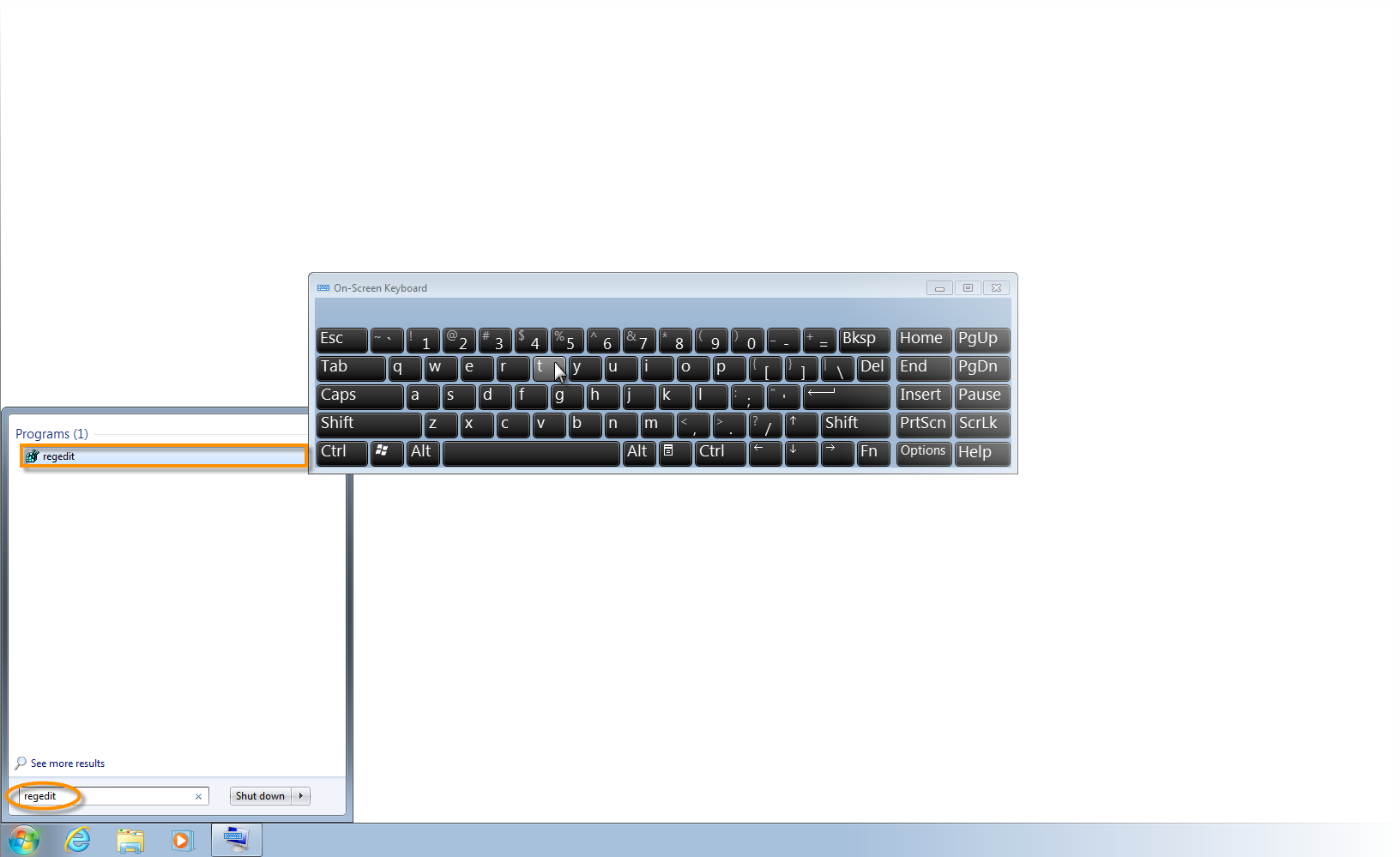
-
In the Registry editor, click Edit, then select Find....
-
In the Find dialog, type
aswKbdusing the onscreen keyboard, then click Find Next. -
Open each UpperFilters entry that the Registry editor finds, delete the
aswKbdtext from the Value data field, then click OK. -
Repeat the previous step for each UpperFilters entry that the Registry editor finds, then exit the Registry editor and restart your PC.
If your keyboard is still not working after your PC restarts, contact Avast Support for further assistance.
Was this article helpful?

Keep your online identity private!
Browse like no one’s watching with Avast anti-tracking software.